4-Week Puppy Training Plan: Potty, Crate, Commands
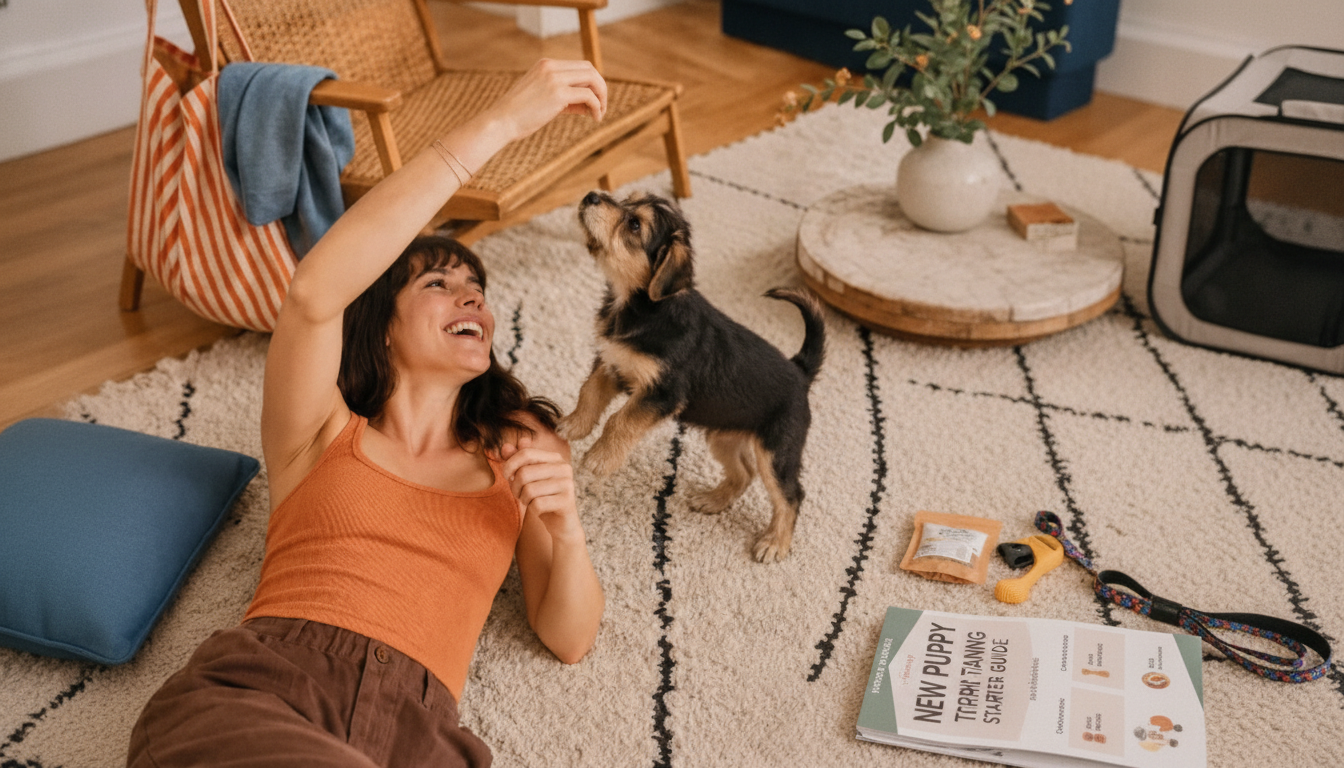
New Puppy Training Starter Guide: A 4-Week Printable Plan for Routines, House-Training, Commands, and Socialization
The first month with a puppy sets patterns that can last for years. A simple routine—paired with short training sessions and calm socialization—builds confidence and helps prevent common headaches like indoor accidents, nipping, and frantic barking. Below is a practical 4-week approach that’s easy for beginners to follow, with clear priorities for sleep, potty breaks, meals, play, and foundational cues.
What to Set Up Before Training Starts
Before the first “sit,” set your puppy up to succeed by reducing confusion and preventing rehearsals of unwanted behavior. The goal is a home environment where the right choice is the easy choice.
- Choose a confinement setup: a crate or playpen in a low-traffic spot, plus a safe play zone for supervised time.
- Pick high-value, tiny treats: reserve them for training so they stay exciting.
- Decide on one potty location: an outdoor spot or indoor pads—consistency speeds learning.
- Create household rules: furniture access, where the puppy sleeps, and who handles nighttime potty trips.
- Plan vet-approved socialization: base outings on vaccination status and focus on safe people/sounds/surfaces and controlled dog exposure (see AVSAB’s guidance: https://avsab.org/resources/position-statements/).
Puppy Essentials Checklist
| Category | Must-Haves | Nice-to-Haves |
|---|---|---|
| Home base | Crate or playpen, washable bedding | Cover for crate, white-noise machine |
| Potty training | Leash, poop bags, enzymatic cleaner | Bell for door training |
| Training | Soft treats, treat pouch | Clicker, long line |
| Chewing & play | Chew toys, tug toy | Food puzzle, snuffle mat |
| Handling & grooming | Brush, nail trimmer/file | Toothbrush, grooming table mat |
The 4-Week Training Rhythm (What to Focus on Each Week)
Think of the first month as “prevention first, skills second, reliability third, and then generalization.” Each week builds on the last without rushing your puppy’s attention span.
- Week 1: settle in and prevent mistakes—predictable potty trips, calm crate intro, name response, gentle handling.
- Week 2: add structure—short leash walks in low-distraction places, “sit,” “down,” and trading games to prevent resource guarding.
- Week 3: build reliability—longer calm periods, “leave it,” brief alone-time practice, and polite greetings.
- Week 4: generalize skills—practice cues in new safe locations, strengthen recall foundations, and broaden socialization.
Sample Daily Routine (Adjust to Age and Vet Guidance)
| Time Block | What to Do | Goal |
|---|---|---|
| Morning | Potty → breakfast → 5-minute training → play | Start the day with predictability and a quick win |
| Mid-morning | Nap in crate/pen | Teach rest and prevent overtired biting |
| Midday | Potty → short walk/sniff time → handling practice | Confidence outdoors + comfort with touch |
| Afternoon | Food puzzle/chew → nap | Occupy safely and reinforce calm |
| Evening | Potty → dinner → training → gentle play | Reinforce cues when mildly distracted |
| Night | Final potty → settle in crate | Reduce nighttime accidents and build sleep routine |
House-Training Without the Guesswork
House-training is mostly management and timing. Your puppy isn’t being stubborn; they’re learning where the bathroom “belongs,” and your job is to make that answer obvious.
- Use a timer: potty after waking, after eating/drinking, after play, and every 30–60 minutes for young puppies (stretch it gradually as success improves).
- Supervise or confine: freedom is earned; most accidents happen during unsupervised wandering.
- Reward immediately: deliver a treat within 1–2 seconds of finishing in the right spot.
- Clean correctly: use an enzymatic cleaner so odor cues don’t invite repeat accidents.
- If an accident happens: interrupt gently, go to the potty spot, then reinforce the next correct potty—skip punishment.
If you want a step-by-step refresher, the AKC’s overview is a helpful reference: https://www.akc.org/expert-advice/training/how-to-potty-train-a-puppy/.
First Commands That Make Everything Easier
Early cues aren’t about “perfect obedience.” They’re tools for communication that help your puppy succeed in real life—at the door, on walks, around food, and near tempting objects.
- Name response: say the name once → reward eye contact. This becomes the engine behind recall and focus.
- Sit: lure into position and reward; use it for polite greetings and before meals.
- Down: teaches calmness; pair with low-energy moments so it doesn’t become a “wrestling move.”
- Leave it: start with a closed hand; reward disengagement; later move to safe floor items.
- Drop it: trade for a treat to prevent keep-away and protect against swallowing hazards.
Five-Minute Training Session Template
| Minute | Exercise | Tip |
|---|---|---|
| 1 | Name response (5 reps) | Reward fast; stop before interest drops |
| 1 | Sit (5 reps) | Mark the moment the puppy sits |
| 1 | Down (3–5 reps) | Reward calm holds (1–2 seconds) |
| 1 | Leave it (5 reps) | Reward for looking away from the hand/item |
| 1 | Play break | End on fun to keep enthusiasm high |
Socialization That Builds Confidence (Not Chaos)
Socialization is not about collecting as many greetings as possible. It’s about building a puppy who can notice the world and stay relaxed. Short sessions with gentle rewards beat long, overwhelming outings.
Crate Training and Alone-Time Skills
A crate (or pen) is most effective when it predicts comfort and calm, not isolation. Keep early steps easy, upbeat, and short. For a detailed, humane overview, see: https://www.humanesociety.org/resources/crate-training-101.
A Printable Plan to Keep Everyone Consistent
Helpful Printable Downloads
- New Puppy Training Starter Guide printable eBook
- Minimalist Travel Packing Planner | Digital Packing Guide (useful for organizing puppy sitters, boarding, or first road trips)
- Eco-Friendly Traveler Checklist | Sustainable Travel Digital Download (a quick checklist format that works well for pet travel prep, too)
FAQ
What is the first thing to teach a new puppy?
Start with name response and a predictable potty routine. Name response builds attention on cue, and consistent potty trips prevent indoor habits from forming when your puppy is still learning where to go.









Leave a comment