Pack Light, Stay Calm: Minimalist Digital Packing Planner
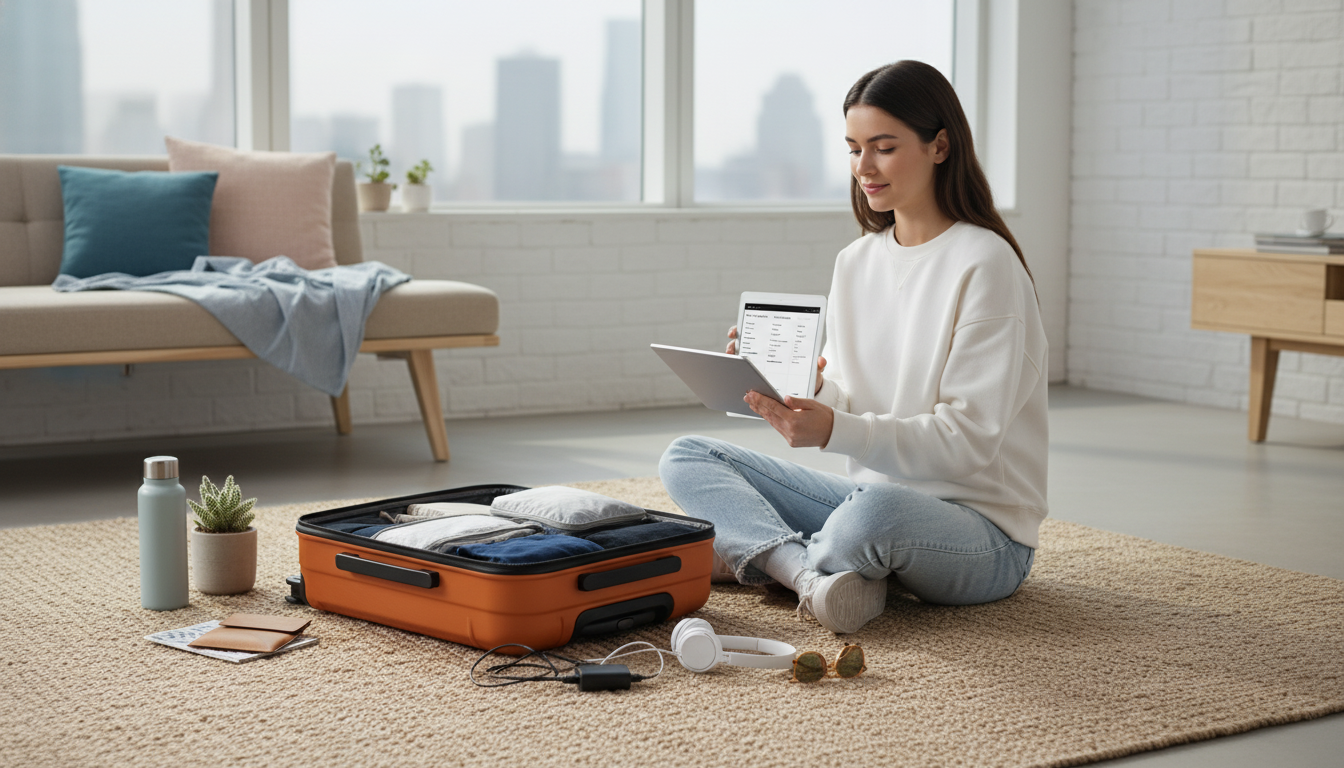
Minimalist Travel Packing Planner: A Digital Guide to Pack Light and Stay Calm
Packing light is less about owning fewer things and more about making faster, smarter decisions. A minimalist packing system keeps essentials covered, reduces last-minute stress, and makes moving through airports, train stations, and hotel rooms noticeably easier. This guide breaks down a simple, repeatable approach and shows how a digital planner can keep every trip consistent.
Why minimalist packing works (and what it solves)
Minimalist packing is a decision system. Instead of debating every “what if,” you build rules that reflect how you actually travel.
- Cuts decision fatigue by turning “what if” items into clear rules (weather, activities, laundry access).
- Reduces baggage weight and bulk, making transit days faster and less stressful.
- Creates a reliable routine: the same core kit, with only a few trip-specific swaps.
- Lowers the chance of forgetting essentials by using checklists that match real travel scenarios.
It also makes it easier to comply with practical constraints like carry-on liquids limits (see TSA’s liquids rule) and destination-specific health needs (the CDC’s pack smart guidance is a helpful reference).
The three-step method: core kit, capsules, and constraints
This method keeps packing consistent while still adapting to different kinds of trips.
Step 1 — Core kit
Your core kit is what you pack for nearly every trip, no matter the destination. Think documents, chargers, toiletry basics, and sleep essentials. When you standardize these items, you stop re-creating the wheel every time you travel.
Step 2 — Capsules
Capsules are small add-ons based on trip type, not vague possibilities. Examples: a work capsule (laptop + one blazer), a beach capsule (swimwear + packable sandals), a hiking capsule (trail shoes + hydration), a formal capsule (one outfit), or a cold-weather capsule (gloves + heavier layer).
Step 3 — Constraints
Define limits before you start packing so you’re not negotiating with yourself at midnight.
- Bag size (carry-on only, personal item only, or a set capacity)
- Number of shoes (often the biggest space breaker)
- Laundry plan (sink-wash, laundromat, hotel service)
- Climate range (one realistic range, not every possible forecast swing)
Use a simple “one in, one out” rule for extras: if something gets added, remove something of similar size.
A practical minimalist packing list (customize in minutes)
The fastest way to pack light is to limit variables. Start with a baseline, then adjust for weather and activities.
Clothing
Pick a tight color palette (2–3 neutrals + 1 accent) so everything mixes. Prioritize layers and repeatable outfits: you’re aiming for multiple combinations, not a different look every day.
Shoes
Limit to 1–2 pairs. Select one all-day walking option first, then add a second compact pair only if it serves a real need (work dress code, beach, gym).
Toiletries
Decant liquids, use solids where possible, and avoid duplicates. If you bring a “backup” of anything, it should be tiny—travel size only.
Tech
Pack only what supports planned activities. Add adapters based on destination, and consider a single multi-port charger instead of multiple bricks and cables.
Documents
Keep a single “travel wallet” system: key physical items together, plus secure digital backups (stored safely, not scattered across apps).
Minimalist packing baseline (carry-on friendly)
| Category | Baseline for 3–5 days | Notes for staying light |
|---|---|---|
| Tops | 3–4 | Choose quick-dry; mix solids with one accent piece |
| Bottoms | 2 | One casual, one versatile (or both versatile) |
| Layers | 1–2 | Light jacket + midlayer; swap based on climate |
| Underwear & socks | 4–5 each | Plan one laundry cycle if traveling longer |
| Sleepwear | 1 | Can double as lounge wear |
| Shoes | 1–2 pairs | Wear the bulkiest pair in transit |
| Toiletries | Small kit | Decant liquids; consider solids to reduce leaks |
| Tech | Phone + charger (plus 0–2 extras) | Add laptop/reader only if needed |
| Essentials | Passport/ID, cards, meds | Keep together; add copies stored securely |
Using a digital packing planner to stay organized
A digital system helps you pack the same way every time, without relying on memory. The goal is consistency: fewer forgotten basics and fewer unnecessary purchases.
- Create reusable templates: one for weekend trips, one for work travel, one for extended travel.
- Add checkboxes for “packed,” “to buy,” and “to refill” to prevent last-minute store runs.
- Track “always-packed” items (charging cables, travel adapters, toiletry refills) to reduce repeat purchases.
- Keep a short “trip notes” area: what was unused, what was missed, what to swap next time.
For a ready-to-use system, Minimalist Travel Packing Planner | Digital Packing Guide for Light, Smart & Stress-Free Trips keeps your core kit, capsules, and packing constraints in one place so each trip starts from a proven checklist instead of a blank page.
Common minimalist packing mistakes (and quick fixes)
- Packing for fantasy scenarios: pack for planned activities and one reasonable contingency (like a light rain layer), not every possible event.
- Too many “just in case” items: set a strict small pouch limit for extras (one pouch only). When it’s full, you’re done.
- Ignoring laundry access: a simple sink-wash plan or quick laundromat stop can cut clothing volume dramatically.
- Overpacking toiletries: standardize a small kit and replenish after each trip so you’re never “prepping” from scratch.
- Bringing the wrong bag: an oversized bag invites overpacking; choose a size limit first, then pack to fit it.
Sustainable swaps that also reduce weight
If sustainability is part of your travel routine, pair your packing workflow with Eco-Friendly Traveler Checklist | Sustainable Travel Digital Download to stay consistent with low-waste essentials and simple green habits.
Minimalist Travel Packing Planner (digital): what it helps with
FAQ
What is a good minimalist packing list?
Start with a carry-on baseline: 3–4 tops, 2 bottoms, 1–2 layers, 4–5 underwear/socks, 1–2 shoes, a small toiletries kit, and essential documents/meds. Keep colors cohesive, plan one laundry option for longer trips, and add only one small capsule for special activities.









Leave a comment