First Things to Teach a New Puppy: Potty, Crate, “Yes”
What is the first thing to teach a new puppy?
The first thing to teach a new puppy is a predictable potty routine—where to go, when to go, and what earns praise. Potty training sets the tone for everything else because it prevents accidents, builds trust, and helps your puppy learn that good choices get rewarded.
Start with a simple potty schedule
On day one, take your puppy out frequently: right after waking up, after eating or drinking, after playtime, and every 30–60 minutes while they’re adjusting. Go to the same spot each time, wait quietly, and reward immediately when they finish. Consistency helps your puppy connect the feeling of needing to go with the right place to do it.
Pair potty training with crate training
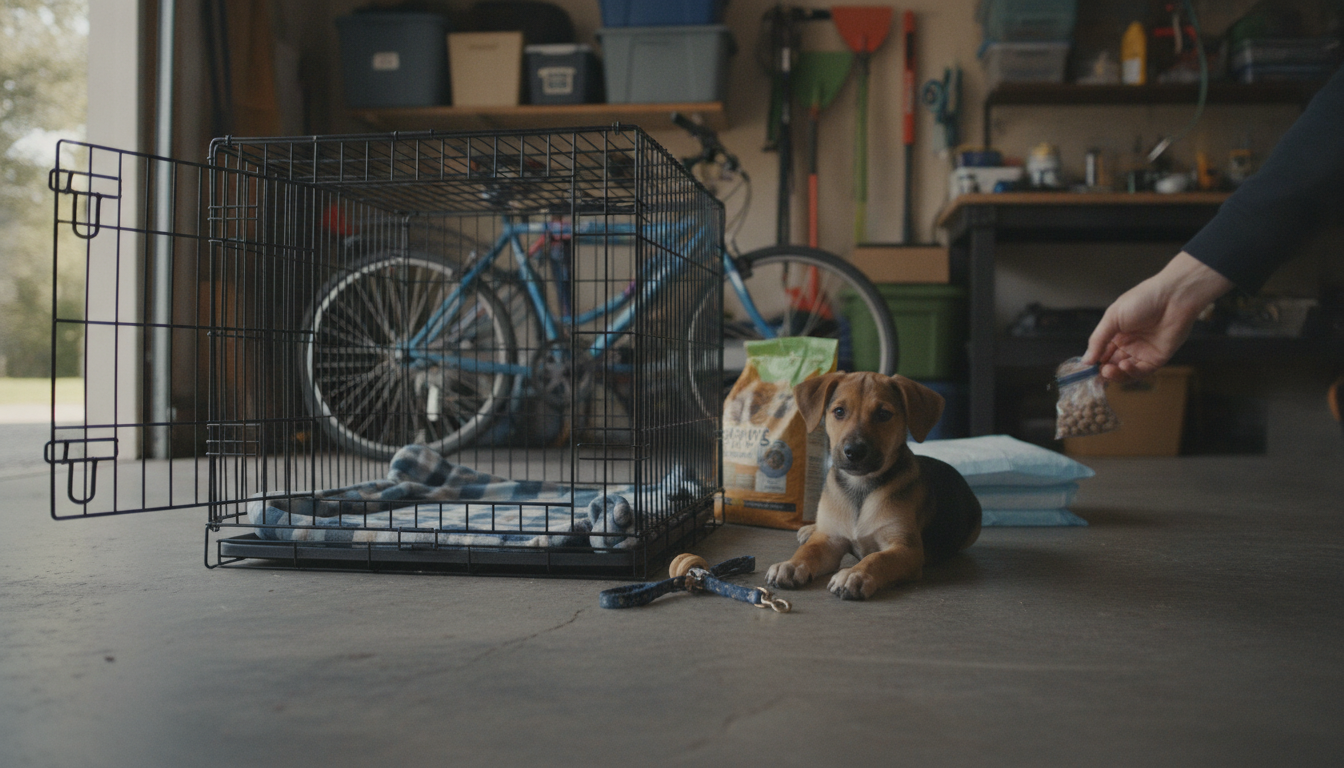
A properly sized crate supports potty training by preventing roaming and encouraging your puppy to “hold it” for short periods. Use the crate for brief rest breaks and nighttime sleep, then go straight outside when you open the door. Keep it positive—treats, calm praise, and a comfortable setup—so the crate feels safe, not like punishment.
Teach your puppy what “yes” means
Before formal commands, teach a reward marker like “Yes!” (or a clicker). Say the marker the instant your puppy does something you like, then give a treat. This one skill speeds up every lesson—potty training, coming when called, and calm behaviors—because your puppy learns exactly what earned the reward.
Add one safety command: “Come”
Once potty basics are underway, begin a gentle “Come” indoors. Say their name, then “Come,” and reward when they reach you. Keep it upbeat and never use “Come” to end fun; it should always feel like a win.
For a day-by-day approach that combines potty training, crate training, and first commands, follow the 4-week puppy training plan here.
FAQ
How long does it take to potty train a puppy?
Many puppies show steady progress in 2–4 weeks with a strict schedule, but full reliability can take a few months. Age, consistency, and supervision make the biggest difference.










Leave a comment